Let’s be real for a second, whisky can be a bit intimidating. You walk into a bar, and there are five hundred bottles staring you down, all claiming to be "handcrafted," "artisanal," or "the nectar of the gods." But if you’ve ever taken a sip of a single malt and thought, "Eh, it’s alright, but I’ve had better," you might be falling victim to some common misconceptions.
As someone who spends way too much time around copper stills and sacks of grain (I literally dream about malt profiles at this point, send help), I see people make the same mistakes when they talk about, buy, or even taste whisky. Most of these blunders come down to a misunderstanding of the single malt whisky ingredients.
You’d think with only three main ingredients, water, malted barley, and yeast, it’d be hard to mess up, right? Wrong! Even the tiniest tweak in the malt whisky ingredients can turn a smooth, adventurous spirit into something that tastes like it was brewed in a bathtub.
So, grab a glass (maybe a Tiny Bear one?), pull up a chair, and let’s dive into the 7 mistakes you’re making with your whisky knowledge and how we fix ‘em here at the distillery.
1. Thinking All Barley is Created Equal
When people talk about single malt whiskey ingredients, they usually just say "barley" and move on. But that’s like saying all grapes are the same when making wine. If you tried to make a world-class Shiraz with table grapes from the local supermarket, you’d be laughed out of the winery.
Barley is the soul of the spirit. The specific variety of barley and where it’s grown changes the starch content, which ultimately changes the flavour. If a distillery uses cheap, mass-produced feed-grade grain, you’re going to taste it. At Tiny Bear, we’re obsessed with the "craft" part of "handcrafted." We want the bold stuff. We want the grain to speak for itself before it even hits the barrel.
2. Asking "Wait, What is Malting in Whiskey anyway?" (And then ignoring the answer)
If you’ve ever wondered what is malting in whiskey, you’re already ahead of the pack. A lot of punters think you just throw raw grain into a pot and hope for the best. Nope!
Malting is basically tricking the barley into thinking it’s time to grow. We soak it in water, let it start to sprout, and then stop the process by drying it out. This "wakes up" the enzymes that turn starch into sugar. Why do we care? Because yeast can’t eat starch; it needs sugar to make alcohol.
The mistake? Thinking the drying process doesn’t matter. How you dry that malt, whether you use hot air or smoky peat, dictates the entire "base" flavour of your whisky. If you don't respect the malt, you're basically building a house on a shaky foundation.
 A close-up of malted barley grains, some showing tiny sprouts, laid out on a wooden surface to illustrate the malting process.]
3. Underestimating the "Magic" of Water
"It’s just water, Evan! It comes out of the tap!"
I hear this all the time. But listen, water is the largest component of single malt whisky ingredients. It’s used for mashing, it’s used for cooling, and it’s used to bring the spirit down to bottling strength.
If your water is full of minerals or chlorine, your whisky is going to taste... well, like a swimming pool. High-quality water is what makes the spirit "round" and soft on the palate. We treat our water like a precious resource because, frankly, it is. Without pure water, those delicate notes from the malt in whisky just get drowned out.
4. Treating Yeast Like a Sidekick
Yeast is the unsung hero. While the malt whisky ingredients provide the fuel, yeast is the engine. A lot of mass-production places use high-yield yeast that just pumps out alcohol as fast as possible.
But if you want a whisky with character, something with those fruity, spicy, or buttery notes, you need a yeast that takes its sweet time. We love a long fermentation here. It’s like slow-cooking a roast sanga; you can’t rush the good stuff. If you think yeast is just there to "make the bubbles," you’re missing out on about 30% of the potential flavour profile.
5. Thinking the Barrel is the Only Source of Flavour
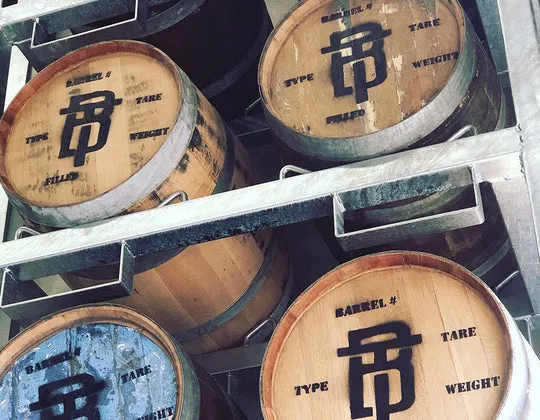
This is a big one. People often say, "The wood makes the whisky." And look, the wood is huge (that's why we have rows of barrels aging away in the distillery), but it’s not the only thing.
If you put a boring, industrial spirit into a fancy French Oak barrel, you’ll get a drink that tastes like fancy wood and... nothing else. The single malt whisky ingredients create the "new make" spirit. If that spirit isn't bold and adventurous from the start, no amount of oak can save it. You need a high-quality base to interact with the wood.
6. Overlooking the "Grind"
When we talk about malt in whisky, we have to talk about how we crush it. This is called the "grist." If you grind it too fine, it turns into floury sludge (the technical term is "getting stuck," and it’s a nightmare to clean up). If it’s too coarse, you don't get all the sugars out.
It sounds like a small detail, but it’s where the "handcrafted" part really kicks in. We’re constantly tweaking the mill to make sure we’re getting the perfect extraction. It’s a messy, dusty job, and I usually end up looking like I’ve been in a flour fight, but it’s worth it for that perfect wash.
7. Buying the Marketing, Not the Ingredients
The biggest mistake? Letting a fancy label distract you from what’s actually inside the bottle. Big commercial brands often use "E150a" (caramel colouring) to make their whisky look older or more consistent.
We don't play that game. When you look at our booze collection, what you see is what you get. The colour comes from the grain and the wood, and the flavour comes from the hard work we put into sourcing the best single malt whiskey ingredients.
If you want to see how we do things differently, you should honestly just book a tasting. We’ll show you the stills, let you smell the malt, and probably bend your ear about yeast strains for way longer than you expected.

How to Fix These Mistakes (The Tiny Bear Way)
So, how do you become a whisky pro? It’s pretty simple:
- Read the label: Look for "non-chill filtered" and "natural colour."
- Geek out on the grain: Ask about the malt whisky ingredients. Is it locally sourced? What’s the variety?
- Trust your palate: If it tastes flat, it’s probably because they cut corners on the fermentation or the grain quality.
- Support local: Small-batch distilleries (like us!) can afford to be picky about ingredients in a way the massive factories can’t.
We’re all about the adventure here. Whether we’re doing a butter wash or experimenting with new botanicals in our gin, the goal is always to create something that makes you go "Wow."
If you’re ready to stop making these mistakes and start drinking the good stuff, come hang out with us. We’ve even got a Den Membership for the real enthusiasts who want the inside scoop (and the best bottles) before anyone else.
At the end of the day, whisky is supposed to be fun. It’s a conversation starter, a celebratory pour, and a craft that we’re lucky enough to practice every day. Just remember: it all starts with the grain. Respect the malt, and the malt will respect you.
Cheers,
Evan Stewart
Tiny Bear Distillery