


How’s it going, legends? Evan here from the sales team at Tiny Bear.
If you’ve been following our socials lately, you might have noticed a bit of a buzz around the distillery. No, it’s not just the caffeine from the latest batch of 'Brew' Coffee Liqueur (though that helps). We are currently staring down the barrel, quite literally, of some of our most exciting new releases yet. We’ve got some absolute crackers sitting in the warehouse, aging gracefully and getting ready for you lot to enjoy.
But before we start cracking bungs and pouring drams, I wanted to take a step back. We get heaps of punters coming through the cellar door asking, "What actually goes into this stuff?"
It’s easy to get lost in the jargon of the whisky world. You hear terms like "mash bill," "phenolic parts per million," and "esters," and suddenly you feel like you need a chemistry degree just to enjoy a drink. Well, forget that. At Tiny Bear, we’re all about keeping it rad and keeping it real.
This is the first part of a series where we’re going to pull back the curtain on our process. Today, we’re talking about the "Holy Trinity" of single malt whisky ingredients: Water, Yeast, and the star of the show, Malted Barley.
The Simplicity of the "Immense Spirit"
There’s a bit of magic in the fact that one of the most complex spirits on the planet comes from just three humble ingredients. It’s a testament to the "immense spirit" within the ingredients themselves and the craft of the people handling them. When you strip everything away, single malt whisky ingredients are actually pretty basic. But as any chef (or distiller) will tell you, when you’ve only got three things to work with, they’d better be bloody good.

1. The Water: More Than Just a Mixer
You might think water is just the boring bit, but it’s actually the lifeblood of the distillery. We use it for everything.
In the whisky world, we talk about "production water" and "process water." Process water is the stuff that cleans the floors and cools the condensers, it's the unsung hero that keeps the wheels turning. But the production water? That’s the stuff that actually makes it into your glass.
Why does it matter? Because water carries minerals. Depending on where a distillery is, the water might be "soft" (low minerals) or "hard" (high minerals). This affects how the yeast behaves and how the flavours are extracted from the grain. We’re lucky here in Melbourne to have access to some of the best water in the world, which lets the character of our malt in whisky really shine through without being masked by heavy metallic tastes.
2. The Yeast: Our Tiny, Hardworking Mates
If the barley is the fuel, the yeast is the engine. These tiny little single-celled organisms are the hardest workers in the building. Their only job in life is to eat sugar and poop out alcohol and CO2. (It sounds gross when you put it like that, but hey, it works!)
For single malt, we usually use a strain called Saccharomyces Cerevisiae. We don’t just throw any old bread yeast in there, though. We use specific distilling strains that are bred to handle higher alcohol environments and, more importantly, to produce those fruity, spicy "esters" that give Tiny Bear its signature vibe.
Without yeast, you just have a big vat of sweet grain soup (which is basically a "sanga" in liquid form). The yeast turns that soup into a "wash," which is essentially a strong, unhopped beer.
3. The Star of the Show: Malted Barley
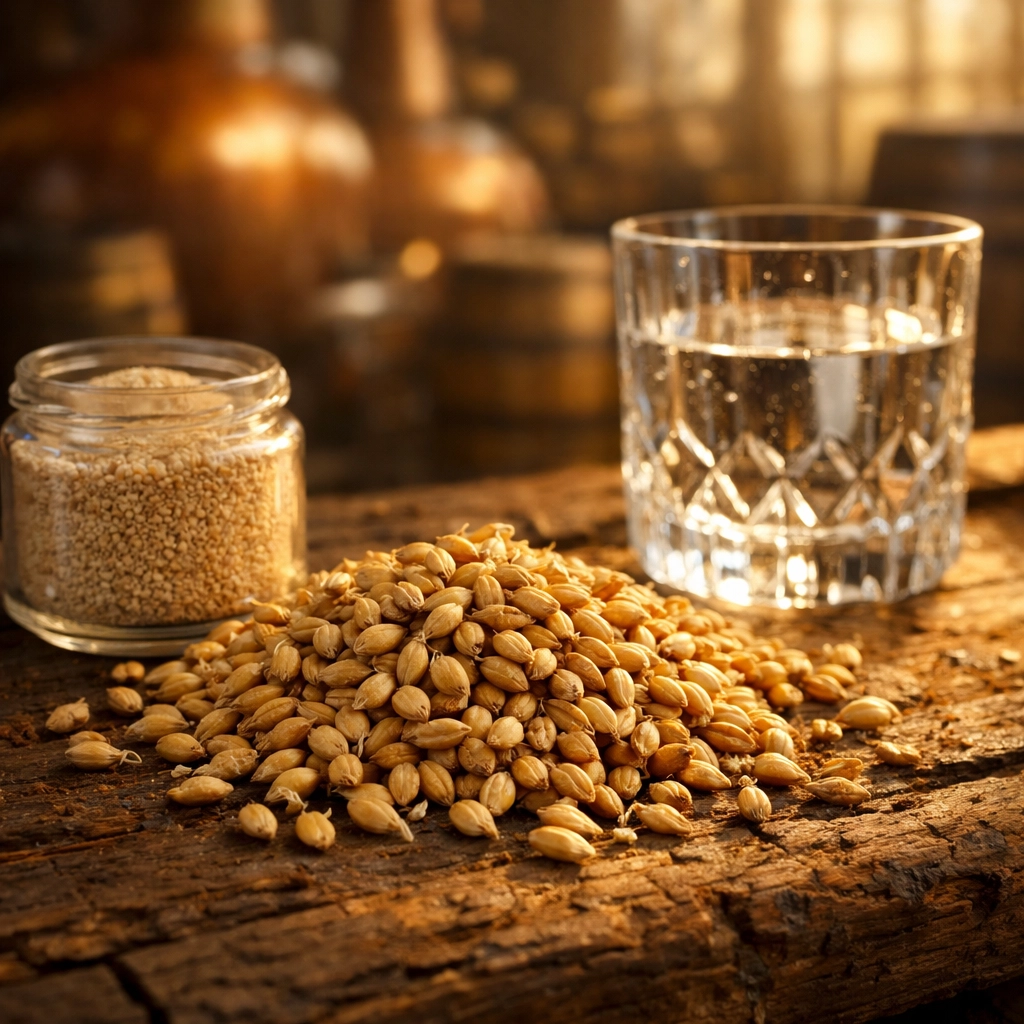
Now, let’s get into the nitty-gritty. To be called a "Single Malt," the whisky must be made from 100% malted barley. No corn, no rye, no wheat. Just barley.
But why barley? And what the heck is "malting"?
What is Malting in Whiskey?
If you took a handful of raw barley from a field and tried to ferment it, nothing would happen. The sugars are all locked away inside the grain as starch. Yeast can’t eat starch. It’s like trying to eat a coconut without cracking the shell.
Malting is the process of tricking the grain into thinking it’s time to grow. We want to unlock that shell. Here’s the "Plain English" breakdown of how it works:
- Steeping: We soak the barley in water to wake it up. It thinks, "Oh, hey! It’s raining! Time to turn into a plant."
- Germination: The grain starts to sprout. As it does this, it produces enzymes that start converting those hard starches into lovely, fermentable sugars.
- Kilning: This is the "Stop right there!" moment. Before the grain actually grows into a little green shoot and uses up all that sugar energy, we heat it up in a kiln to dry it out and stop the growth.
This process leaves us with "malted" barley. Depending on how long or how hot we kiln it, we can get different flavours, from light and biscuity to dark and chocolatey. This is where the foundation of the flavour profile is built. When you're looking at malt whisky ingredients, the quality of this malting process is everything.
Why Do We Care So Much About the Grain?
The malt in whisky provides the backbone. It’s the texture, the sweetness, and that "cereal" note that reminds you you’re drinking something crafted from the earth. At Tiny Bear, we’re obsessed with the quality of our grain because we want that "immense spirit" to come through in every drop.
We aren't some massive factory churning out millions of litres of neutral spirit. We’re a small-batch distillery, which means we can taste the difference when the grain is top-notch. It’s artisanal, it’s hands-on, and yeah, it’s a bit more work, but the result is a spirit that has a soul.
The Journey Has Just Begun
Understanding the single malt whisky ingredients is like learning the chords before you start writing a rock anthem. Now that you know about the water, the yeast, and the magic of malting, you’re ready for the next step.
In our next post, we’re going to talk about what happens when this "wash" hits our beautiful copper stills. We’ll dive into the distillation process: where we separate the "heads," "hearts," and "tails" to find that perfect, pure spirit.
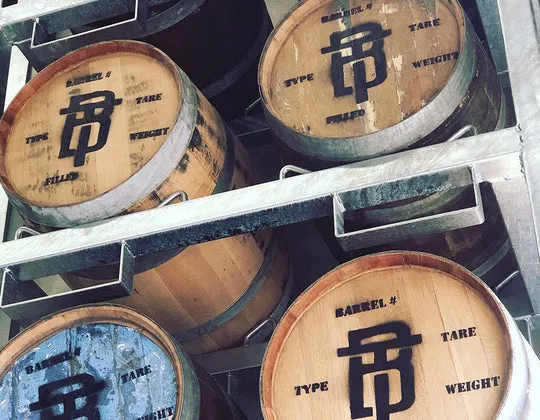
And eventually, we’ll get to the real "rad" stuff: the wood. Because as good as our raw spirit is, it’s the years spent inside a charred oak barrel that turn it into the liquid gold we’re getting ready to release.
Want to Taste the Process?
If all this talk of grain and yeast has made you thirsty, you don't have to wait for the new releases. You can head over to our online shop and check out what we’ve got on the shelves right now. Or better yet, if you’re in the neighbourhood, come visit us for a tasting. There’s nothing like smelling the mash and seeing the stills in person to really make it click.
Stay tuned for Part 2, where we’ll be talking about the "alchemy" of the still. It’s going to be a wild ride.
Cheers,
Evan Stewart Sales & Whisky Enthusiast Tiny Bear Distillery
P.S. If you want to be the first to know when those new barrels are finally ready to be bottled, make sure you sign up for our mailing list. Our limited releases usually go faster than a sanga at a Sunday BBQ!
